



Industrial Automation Solutions for Smarter, Safer, and More Efficient Operations
In modern manufacturing, efficiency is no longer just about producing faster. Companies also need higher accuracy, better safety, lower downtime, and more flexible production lines. This is where Industrial Automation Solutions from FIXCHIPS GLOBAL play a key role.
What Are Industrial Automation Solutions?
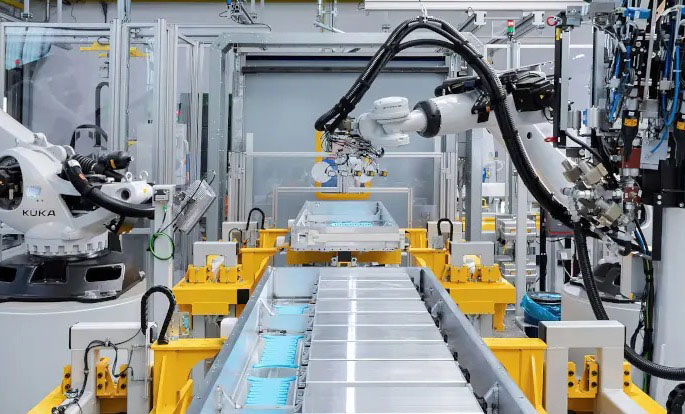
Industrial Automation Solutions refer to integrated systems designed to control, monitor, and optimize industrial equipment and processes. These solutions can be used in factories, power plants, packaging lines, water treatment systems, logistics centers, food production, chemical processing, and many other industrial environments.
Industrial automation combines control systems, sensors, drives, software, and communication networks to automate machines, production lines, and factory processes. From data acquisition and embedded control to industrial interfaces and power management, FIXCHIPS GLOBAL supports customers with reliable electronic components for building smarter and more stable industrial systems.
- Embedded controllers and microcontrollers
- Data acquisition components
- ADCs and DACs
- Interface ICs and transceivers
- Sensors and signal conditioning components
- PMICs and voltage regulators
- Memory components
- Clock and timing devices
- Power drivers and motor control components
- Communication modules
- Control boards and industrial electronic assemblies
Instead of sourcing separate parts without a clear system requirement, many companies choose a trusted component partner to improve compatibility, availability, and long-term supply stability. FIXCHIPS GLOBAL helps customers source key components for industrial control, automation equipment, embedded systems, and intelligent manufacturing applications.
Why Industrial Automation Matters
Industrial automation helps companies reduce manual work, improve process control, and make production more consistent. In industries where precision and uptime are critical, automation is not just a convenience. It is a competitive advantage.
With the right Industrial Automation Solutions, businesses can improve production efficiency, reduce human error, increase product quality, lower labor and maintenance costs, improve equipment safety, monitor production in real time, reduce unexpected downtime, support flexible manufacturing, collect useful production data, and improve energy efficiency.
For example, an automated production line may use embedded controllers, analog front-end components, interface ICs, memory, PMICs, and motor control devices to achieve reliable machine operation. Operators can monitor system status, adjust parameters, receive alarms, and respond quickly to abnormal conditions.
Key Components for Industrial Automation Solutions
A strong automation system depends on reliable electronic components working together. Each component has a specific role in signal acquisition, control, communication, power management, and system protection.
| Component Type | Main Function | Common Applications |
|---|---|---|
| Embedded Components | Provide core processing and control | Industrial controllers, control boards, machine automation |
| Data Acquisition | Converts and processes analog/digital signals | Sensor signal collection, measurement systems, test equipment |
| Interface ICs | Enable communication between devices | RS-485, CAN, Ethernet, I/O expansion, industrial networking |
| PMIC & Power Components | Manage voltage, current, and system power | Control boards, drives, power modules, protection circuits |
| Linear Components | Amplify, compare, and condition signals | Analog signal processing, sensor interfaces, monitoring circuits |
| Clock & Timing | Provide stable timing signals | Communication systems, controllers, synchronized equipment |
| Memory | Stores programs, data, and configuration | Embedded systems, PLC modules, industrial computers |
Industrial Automation Solutions vs. Traditional Manual Control
Many companies still rely on manual operation or outdated control systems. While these methods may work for simple tasks, they often limit growth and efficiency. Modern industrial automation systems use electronic control, real-time monitoring, and reliable communication to improve performance.
| Comparison Item | Traditional Manual Control | Industrial Automation Solutions |
|---|---|---|
| Production Speed | Depends heavily on operator skill | Faster and more consistent |
| Accuracy | Higher risk of human error | High precision and repeatability |
| Monitoring | Limited or manual inspection | Real-time data and alarms |
| Downtime Response | Problems may be found late | Faults can be detected quickly |
| Labor Cost | Higher long-term labor demand | Reduced manual workload |
| Scalability | Difficult to expand | Easier to upgrade and integrate |
| Component Support | Often fragmented sourcing | Stable sourcing from partners like FIXCHIPS GLOBAL |
Common Applications
Manufacturing Automation
Automation is widely used in assembly lines, machining centers, packaging machines, testing equipment, and material handling systems. Embedded controllers, sensors, interface components, and power management devices work together to control each step of the production process.
Process Control
In industries such as chemical, water treatment, food and beverage, and energy, automation systems help control temperature, pressure, flow, mixing, dosing, and other process variables. Data acquisition, analog signal conditioning, and stable communication components are essential in these environments.
Motion Control
Motor drivers, power components, interface ICs, and embedded controllers are used when precise speed, position, and torque control are required. Typical applications include robotics, CNC machinery, printing machines, labeling systems, and high-speed packaging equipment.
Industrial Communication
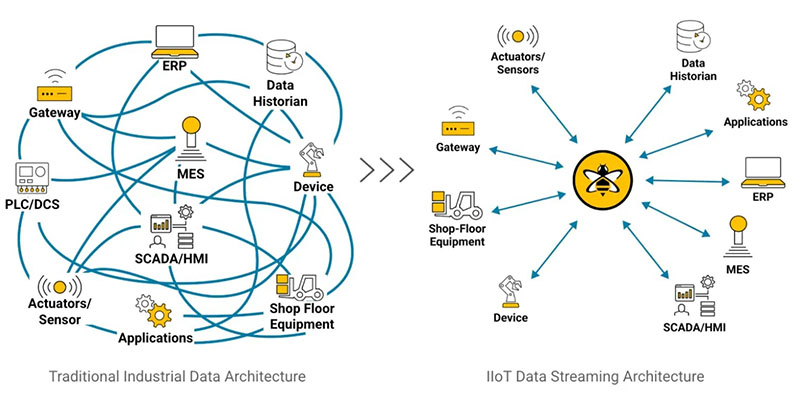
Reliable communication is critical in industrial automation. Interface ICs, transceivers, timing devices, and protection components help connect controllers, sensors, drives, and monitoring systems across the factory floor.
How FIXCHIPS GLOBAL Supports Industrial Automation Projects
FIXCHIPS GLOBAL provides electronic component sourcing support for companies building automation equipment, industrial control systems, embedded boards, communication modules, and intelligent manufacturing devices.
- Data acquisition components
- Embedded processors and microcontrollers
- Interface ICs and communication components
- PMICs and voltage regulators
- Linear ICs and signal conditioning components
- Clock and timing devices
- Memory products
- Power drivers and control components
Choosing the Right Components for Industrial Automation
Choosing the right components depends on the operating environment, control accuracy, communication requirements, power design, and product life cycle. Industrial systems often require stable performance, long-term availability, and strong compatibility.
Before selecting components, customers should consider what signals need to be measured or controlled, what processor or controller architecture is required, which industrial communication interfaces are needed, what voltage and power protection requirements must be met, and whether long-term component availability or alternative parts are required.


